Perge & Aspendos in Winter: Is Cooler Weather Better for Ancient Sites?
Why autumn and winter are the undisputed golden seasons for exploring Perge, the Aspendos Roman Theatre, and Kurşunlu Waterfall without the punishing 40°C summer heat, crowds, or rushed tour itineraries.

Direct Verdict: Yes, visiting Perge and Aspendos during autumn and winter is not merely a viable alternative to summer—it is undeniably the superior experience. During July and August, exploring these vast open-air archaeological complexes is an endurance test: shade is virtually non-existent, temperatures consistently soar past 40°C, and heat radiating from ancient marble avenues causes tourists to rush through in under an hour. In winter, daytime temperatures hover around a crisp, comfortable 16°C to 19°C. You can stroll through the entire 2-kilometer colonnaded avenue of Perge, climb to the 15,000-seat upper tiers of the Aspendos Roman Theatre, and test its legendary acoustics in serene tranquility without sweating, crowds, or tour bus bottlenecks.
Summer vs. Winter Archaeological Comparison Matrix
Understanding how the seasons transform archaeological visits helps you appreciate why winter is the preferred window for history enthusiasts:
| Factor | Midsummer (July – August) | Winter & Autumn (Nov – March) | Practical Advantage |
|---|---|---|---|
| Daytime Temperature | Extreme 38°C to 44°C | Mild 16°C to 19°C | Walk for hours without fatigue, dehydration, or heatstroke risk |
| Shade & Sun Exposure | Zero shade on open marble avenues | Gentle winter sunshine | Lack of shade becomes an asset; pleasant outdoor strolls |
| Crowd & Bus Congestion | Dozens of cruise buses & crowds | Peaceful & uncrowded | Clean photo angles without tourists blocking monuments |
| Aspendos Acoustics | Drowned out by chatty tour groups | Whisper-quiet acoustic clarity | Hear coins drop from the orchestra to the 41st tier |
| Perge Exploration Time | Rushed 45 minutes to flee the heat | Relaxed 2.5 to 3 hours | Visit the stadium, baths, Hellenistic gates & acropolis |
| Kurşunlu Waterfall | Low water flow due to summer drought | Powerful rushing cascades | Vibrant emerald pine groves and full waterfalls |
| Ground Travel Times | Heavy coastal traffic jams | Clear highway corridors | Quick 25–45 min drives from Belek, Kundu & Lara |
| Booking Terms | Rigid non-refundable summer slots | Total Airy flexibility | Pay on tour morning with 100% weather reschedule guarantee |
Perge: Walking Through a Monumental Roman Metropolis
Perge was one of the wealthiest cities of the ancient Pamphylian federation, and its scale is breathtaking. Unlike small, isolated ruins, Perge was a grand urban capital featuring:
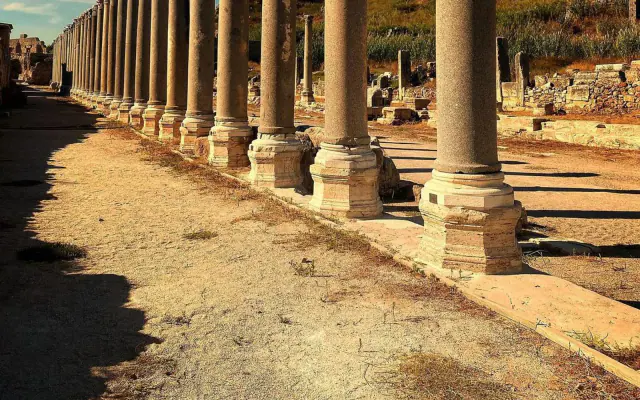
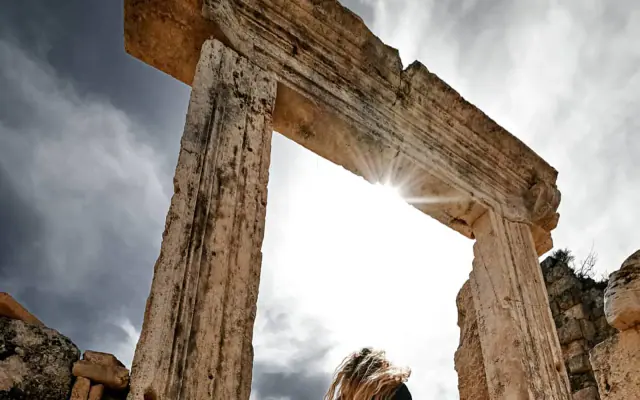
- The 34-Meter Colonnaded Avenue: Flanked by Corinthian marble columns and divided down the center by a flowing water channel punctuated by cascading fountains. In winter, you can walk its full length, admiring the surviving mosaics and carved capitals without squinting through heat waves.
- The 12,000-Seat Stadium: One of the best-preserved classical stadiums anywhere in the Mediterranean, featuring intact barrel-vaulted stone chambers that once served as shops and gladiator holding pens.
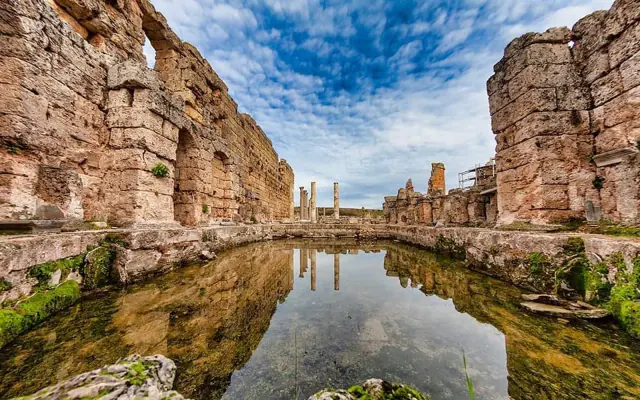
- The Roman Baths: Immense brick-and-marble thermal halls displaying the Roman hypocaust underfloor heating systems, caldarium, and cold pools.
- The Hellenistic Round Towers: The iconic defensive gate of Perge, dating back to the 3rd century BC, standing proudly against the winter sky.
In summer, most tour groups only see the Hellenistic gate and leave. In winter, our guided tour allows you to explore the bath complexes, the agora, the palaestra, and even hike the easy pathway up to the Acropolis plateau for a sweeping panorama of the plain.
Aspendos: The World's Best-Preserved Ancient Roman Theatre
Located 25 kilometers east of Perge along the Köprüçay River, the Roman Theatre of Aspendos is an engineering marvel. Constructed during the reign of Emperor Marcus Aurelius (161–180 AD) by the Greek architect Zenon, it remains the most intact theater of antiquity.
- Acoustic Perfection: Zenon designed the semicircular cavea with such precision that a coin dropped on the orchestra floor can be heard distinctly on the top 41st tier of seating. In the peaceful winter months, when the cavea is not packed with thousands of shouting tourists, you can genuinely experience this acoustic miracle.
- The Intact Scaenae Frons: Unlike almost all other ancient theaters where the backstage wall has collapsed, Aspendos retains its two-story, 24-meter-high ornamental stone stage facade, complete with architectural niches, pediments, and column bases.
- The Upper Gallery Arcades: Climb to the covered barrel-vaulted colonnade at the very top of the auditorium to enjoy shelter, cool breezes, and breathtaking views over the surrounding olive orchards and ancient Roman aqueducts.
Kurşunlu Waterfall: An Emerald Winter Oasis
After immersing yourself in classical Roman stone and marble, the tour transitions into the soothing natural landscape of the Kurşunlu Waterfall Nature Park.
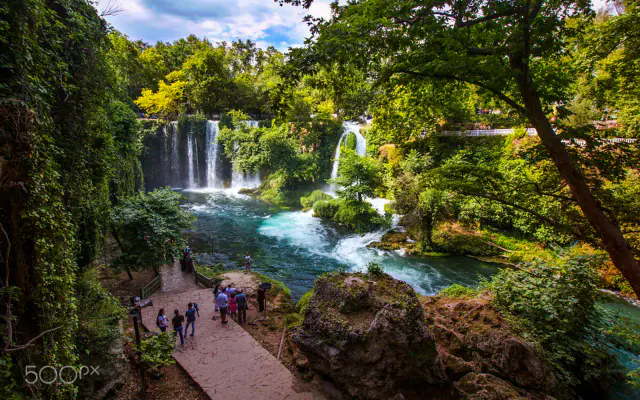
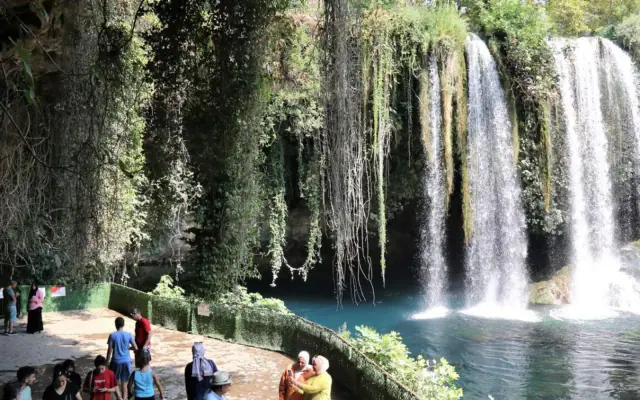
While many Mediterranean waterfalls dry down to a trickle by late August due to agricultural irrigation and summer drought, winter rains replenish the Taurus aquifer. During November through March, the 18-meter cascade crashes in full force into a sequence of seven interconnected emerald-turquoise pools, surrounded by dense pine forests, wild water mint, and ancient watermill ruins. Wooden walking bridges and shaded trails make it a revitalizing 45-minute nature walk before lunch.
Who Should Prioritize Perge & Aspendos in Winter?
- Cultural Travelers & History Lovers: Those who appreciate Roman architecture, urban planning, epigraphy, and classical archaeology will find winter the only season allowing in-depth, unhurried study.
- Amateur & Professional Photographers: Winter morning and afternoon light hits the limestone arches of Aspendos and the marble columns of Perge with warm golden hues, casting long, dramatic shadows ideal for architectural photography.
- Couples & Solo Explorers Seeking Serenity: If your idea of a holiday is escaping noisy entertainment and walking through tranquil ancient history, this tour delivers genuine peace of mind.
- Families with School-Age Children: The sites are spacious, educational, and safe. Children can run through the ancient stadium and test the acoustics in the theater without the danger of heat exhaustion.
Who Should Choose a Different Excursion?
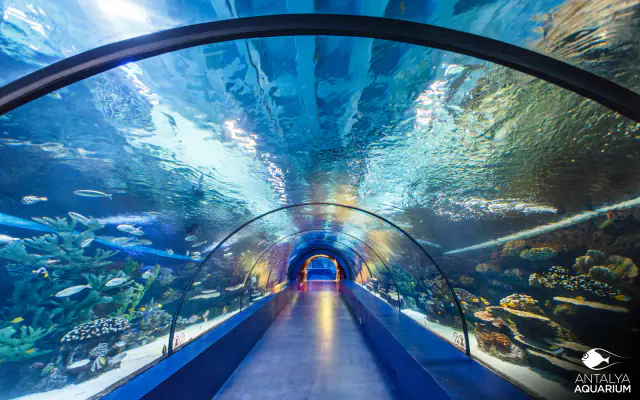
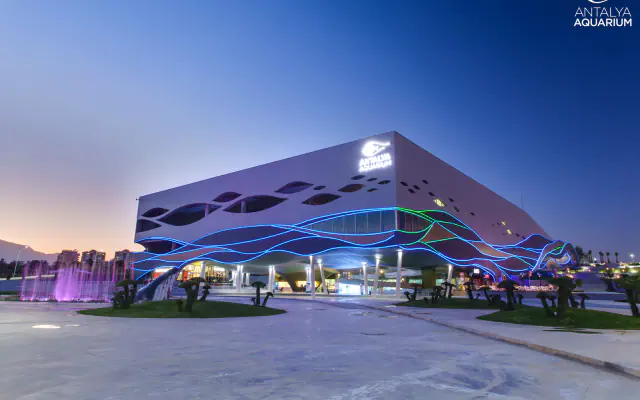
- Travelers Seeking Indoor Shopping or Aquariums on Heavy Rain Days: While ancient stone looks poetic under light drizzle, walking outdoors through open archaeological sites during an active torrential rainstorm is not advisable. On rainy days, opt instead for the Antalya Aquarium or a covered Turkish Hamam.
- Adrenaline & Theme Park Seekers: This is an intellectual, scenic cultural excursion. If you want high-speed rollercoasters and thrills, The Land of Legends Theme Park or winter buggy safaris are better suited.
- Severe Walking Difficulties: While Aspendos is easily accessible at ground level, fully exploring Perge requires walking roughly 3 to 4 kilometers across ancient stone paving, gravel paths, and steps.
What to Wear & Pack for Winter Ancient Sites
The coastal plain around Perge and Serik is mild, but open stone monuments can feel breezy. Here is your essential checklist:
- Footwear with Traction: Leave flip-flops and smooth leather-soled shoes at the hotel. Wear cushioned walking sneakers or light trail shoes to navigate ancient cobblestones safely.
- Comfortable Layers: A cotton t-shirt paired with a light fleece or cardigan and a lightweight windbreaker jacket.
- UV Protection: Even in December and January, the Mediterranean sun is bright; bring sunglasses and a light brimmed hat.
- Camera & Power Bank: You will take hundreds of photos; cold winter air can drain smartphone batteries faster.
- Small Backpack: For your water bottle and personal souvenirs.
Resort Distance & Logistics: The Easy Day Trip
Unlike Pamukkale, which demands a 12–13 hour full-day commitment and 6 hours of highway driving, the Perge, Aspendos & Kurşunlu excursion is a relaxed half-to-full day tour (approx. 6–7 hours). The archaeological sites are conveniently clustered just 20 to 45 minutes east of Antalya's resort belt:
- Belek Hotels: 20 to 30 minutes drive.
- Kundu & Lara Resorts: 25 to 35 minutes drive.
- Antalya City Center: 35 to 45 minutes drive.
- Kemer & Beldibi: 70 to 80 minutes drive.
- Side Hotels: 40 to 50 minutes drive.
The Airy Hotel Gate Courtesy: You will be picked up directly at your hotel main security gate (Nizamiye Kapısı) by a modern, heated, air-conditioned Mercedes Sprinter or VIP minibus. No lobby waiting, no lost time.
Why Book This Classical Winter Tour with Airy?
- Pay on Tour Morning: No upfront credit card deposits. Secure your seats in 60 seconds online and settle the payment in cash or card when boarding the vehicle.
- Evening WhatsApp Coordination: Between 18:00 and 21:00 the night before, our operations team sends you your exact pickup time, vehicle plate number, and driver details.
- Official TÜRSAB Certified Guides: Our guides are licensed historians registered with the Ministry of Culture, providing captivating storytelling rather than rushed tourist shopping stops.
- Weather Guarantee: If heavy rain is forecast on your chosen date, you can reschedule for free to the next sunny morning or cancel with zero penalty.
Official reference sources: Antalya Provincial Directorate of Culture and Tourism | UNESCO World Heritage Tentative List | TÜRSAB Official
Last checked and verified: October 2026
Frequently Asked Questions
Local Antalya excursion specialists. Operational information is checked against current tour programmes and official attraction sources.
Recommended Experiences for This Guide
Perge, Aspendos & Kurşunlu Waterfall Tour
Pamukkale & Hierapolis Tour
City Tour & Waterfalls
Aquarium & Tunnel Tour
Ready to plan your trip?
Discover the best experiences and book your next adventure with Airy.
Explore Destinations